May 20, 2026
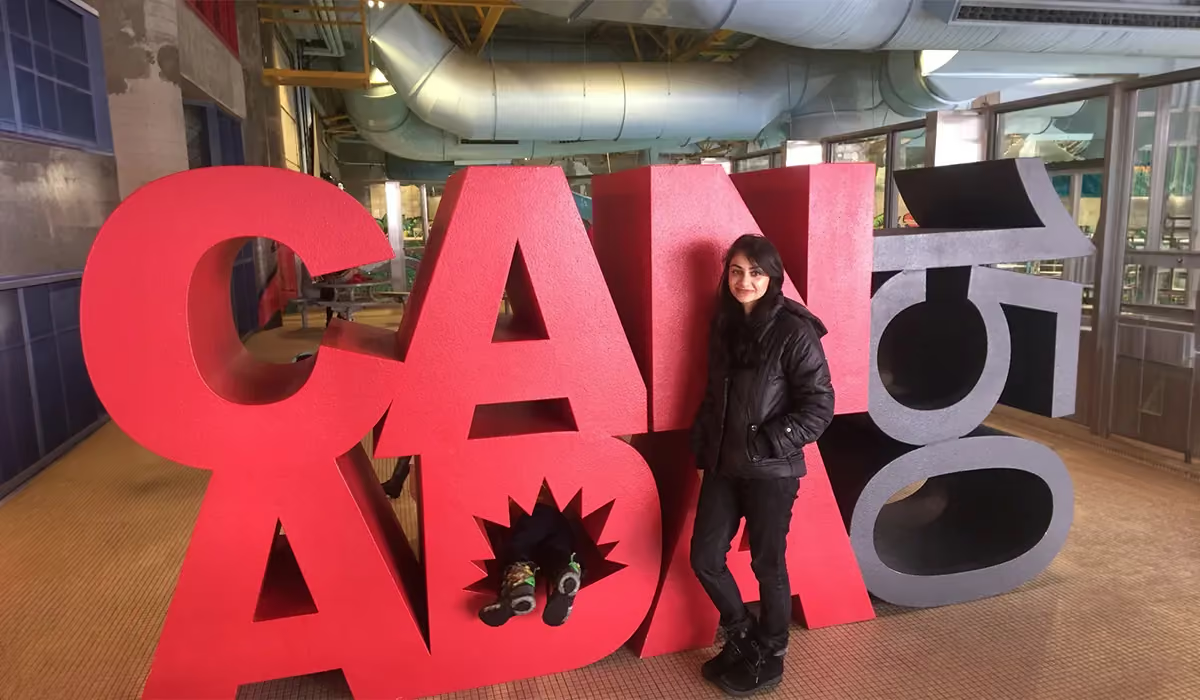
In 2017, Rabbia Mehra arrived in Calgary from India with her husband and their two-and-a-half-year-old son, determined to build a new life in Canada.
Like many newcomers, Rabbia faced the challenge of finding her first professional opportunity in a new country. That opportunity came through an internship placement at Windmill Microlending arranged through a bridge-to-work program from the Canadian Immigrant Women’s Association (CIWA).
What started as a first step into the Canadian job market quickly became something more. After her internship, Rabbia was hired full time, where she grew her career across multiple roles – from supporting clients, to working in loan management and eventually returning to the IT field she had originally trained and worked in before immigrating to Canada. Through curiosity, persistence and a commitment to learning, she advanced to become a Senior Data and Systems Analyst.
While building her career at Windmill, Rabbia and her husband were also working toward another goal. In the evenings and on weekends, they developed their own venture, Agility IT, balancing entrepreneurship with full-time work and family life. In 2026, Rabbia chose to pursue the venture full time, marking a new chapter in her journey.
We recently reconnected with Rabbia to reflect on the moments that shaped her path, from navigating early challenges and balancing responsibilities, to building confidence, expanding her network and discovering what’s possible with the right support.
When you were adjusting to life in Canada, what barriers were you facing?
I was 27 at the time. I had a job at Best Buy Mobile, my husband had a job at a cab company as an overnight dispatcher and we lived in a basement. Because we did not have childcare, we managed our shifts around my son at that time.
At that point in my life, I was so tired. I was managing shifts around my son’s schedule, only to come home to see him sleeping… waiting for buses in freezing temperatures – all those things.
Whenever I applied [for jobs] in my line of work [information technology], I never got a call back. I was frustrated. I was questioning my direction.
I did not have a professional network [in Canada] at that time. I did not know anybody personally, either. The only people I knew were just my husband and my toddler.
Did your time at Windmill affect your view on the experiences of newcomers in Canada?
It expanded my perspective on the newcomer’s journey. When I first arrived in Canada, I was mostly focused on my own experience – finding work, adjusting to a new system [and] taking care of the family. Once I started working with clients, I realised my story was just one of many.
I had a lot of conversations with a lot of vulnerable people and those were eye-opening to me. Especially speaking with single mothers – as a mother, I could relate to their struggles.
At that time, I understood how powerful the right support system can be for newcomers. Sometimes, it could be just words of encouragement. Sometimes they just need people to listen to them. And sometimes it could be a mentorship program.
What did you learn about newcomers that you hadn’t considered from your own personal journey?
I learned how fragile confidence can become when you’re underemployed or unemployed for a long, long period of time. Working as a loan manager, I used to speak to a lot of people who had defaulted their payments.
Over time, I realised it does not just affect your income, your unemployment or underemployment, but it slowly affects your confidence and your sense of identity.
How did your time at Windmill influence your decision to become an entrepreneur?
Agility IT was born in the basement of our home. But the idea was very much influenced by my time at Windmill. When I worked as a loan manager, I interacted with many internationally trained professionals who were struggling to get a first opportunity in Canada. Their biggest barrier, like mine, was the lack of Canadian experience.
That stayed with me. I would talk to my husband about this issue quite a lot, so when we started building Agility IT, we also saw it as a way of “paying it forward” because someone had helped open doors for us when we arrived.
We thought, “if we can create opportunities for others and help those skilled people connect with employers, why not?”
From the time you arrived in Canada to today, do you think that the role of organizations like CIWA or Windmill has changed?
I would say they’re more important now. Information is easier to find today, but guidance is still incredibly important. Organizations like CIWA and Windmill don’t just provide information. They provide structured programs, mentorship, networking, a sense of community – that’s very important for a newcomer. All these things help us understand the system. It helps build confidence and connect newcomers with opportunities.
At Windmill, diversity, equity, inclusion and unity are core to who we are. With many staff members bringing lived experience as newcomers themselves, our team reflects the communities we serve — helping us better support skilled newcomers as they rebuild their careers and futures in Canada.

Fraud alert: Beware of individuals or accounts falsely claiming to represent Windmill Microlending. We never request personal information or payments through social media or messaging apps. Please verify all communication via our official channels ending with "@windmillmicrolending.org", "@lemoulinmicrocredits.org" or contact us via verified information available on our website if you are unsure.