

Explore Our Resources
Learn how to become a cardiology technologist in Canada. This guide explains regulation, CSCT certification, diploma programs, costs, timelines, salary and job outlook for internationally trained professionals.
February 11, 2026
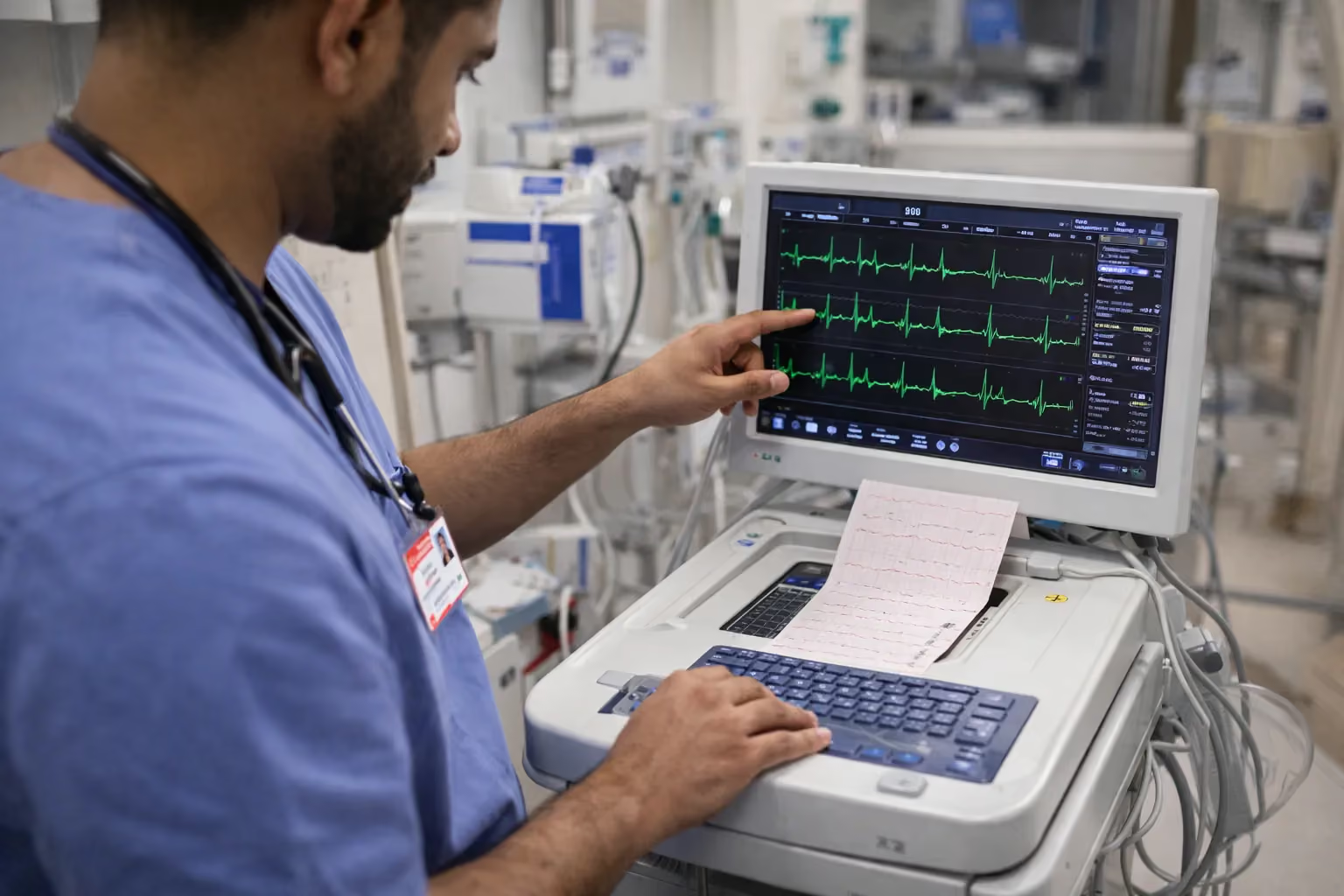
Cardiology technologists play a vital role in Canada’s health-care system by assisting physicians in diagnosing and monitoring heart conditions. As cardiovascular disease remains one of the leading causes of hospitalization and mortality in Canada, demand for cardiac diagnostic services continues to grow. Hospitals, cardiac clinics and diagnostic centres rely on skilled technologists to perform tests such as electrocardiograms (ECGs), stress tests and Holter monitoring.
With an aging population and increasing rates of heart disease, the need for trained cardiac professionals remains steady across provinces. For internationally trained health professionals, cardiology technology offers a practical, in-demand and relatively structured pathway into Canada’s medical sector.
This guide explains regulation, education pathways, certification requirements, timelines, costs and job outlook for newcomers interested in becoming a cardiology technologist in Canada.
Cardiology technologists support cardiologists and other physicians by performing diagnostic tests related to heart function.
Their responsibilities typically include:
They work primarily in hospitals, cardiac clinics, outpatient diagnostic centres and community health facilities.
Regulation varies by province.
In provinces without formal regulation, most employers require national certification as a condition of employment.
To become a cardiology technologist in Canada, candidates typically complete:
Programs include both classroom instruction and clinical placements. Core subjects usually include:
Most newcomers complete a two-year cardiology technology diploma program in Canada. Tuition varies by institution but typically ranges between CAD 12,000 and 20,000 for the full program.
Some internationally trained health professionals may qualify for a Prior Learning Assessment (PLA) if their previous education closely aligns with Canadian standards.
After completing education or PLA, candidates must pass the CSCT national certification exam.
The exam assesses:
Certification demonstrates competency and is widely required across Canada.
In Ontario and Quebec, cardiology technologists must also register with the provincial regulatory body before practising.
In other provinces, national certification is typically sufficient for employment.
For most newcomers, the pathway takes:
If qualifying through PLA, timelines may be shorter depending on documentation and assessment.
The total investment depends on the pathway taken.
Typical costs include:
Compared to many regulated medical professions, cardiology technology offers a more affordable and shorter pathway into health care.
Demand for cardiac diagnostic services remains steady due to:
Cardiology technologists are commonly employed in:
The profession is considered suitable for internationally trained professionals with a background in nursing, laboratory sciences or other health sciences.
Wages vary by province and experience level.
Shift premiums may apply for evenings and weekends.
Cardiology technology can be a strong option for newcomers because:
It offers a practical pathway into Canada’s health-care system without requiring a full medical degree.
Training and certification costs can be challenging, especially for newcomers managing settlement expenses. Windmill Microlending offers low-interest loans of up to $15,000 to support internationally trained professionals with:
Windmill helps skilled newcomers transition into meaningful, in-demand health-care roles across Canada. Check your eligibility today!
It is regulated in Ontario and Quebec. In other provinces, national certification through CSCT is typically required.
Yes. International applicants may complete a Canadian diploma program or qualify through Prior Learning Assessment and pass the national exam.
Most candidates complete the pathway in approximately two years.
Yes. Cardiac diagnostic services remain essential in hospitals and outpatient clinics across Canada.

Fraud alert: Beware of individuals or accounts falsely claiming to represent Windmill Microlending. We never request personal information or payments through social media or messaging apps. Please verify all communication via our official channels ending with "@windmillmicrolending.org", "@lemoulinmicrocredits.org" or contact us via verified information available on our website if you are unsure.