

Explore Our Resources
Learn how to become a heavy equipment operator in Alberta, including training options, safety requirements, apprenticeship pathways, job outlook, wages and financial support for newcomers.
July 31, 2026
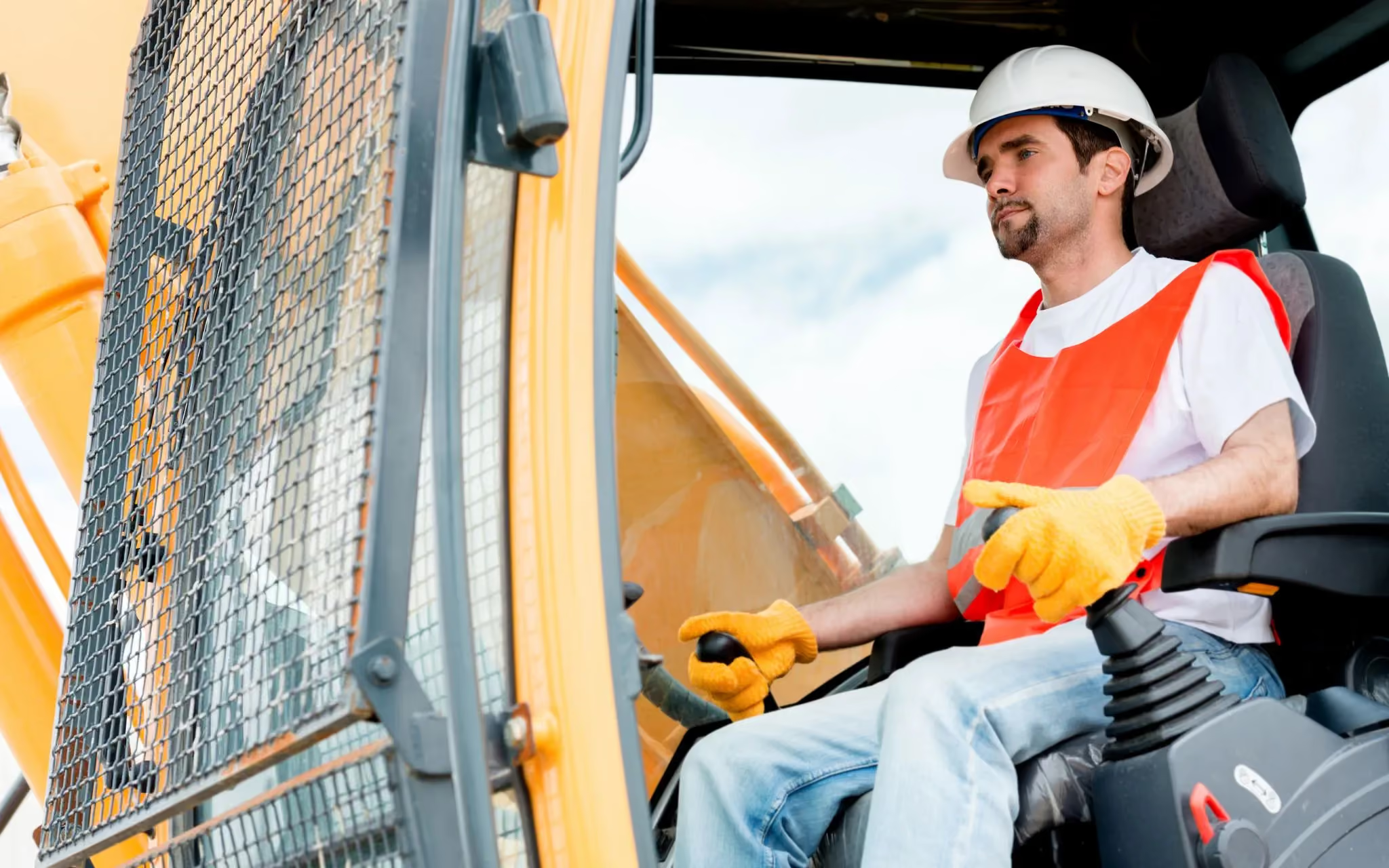
For many newcomers, heavy equipment operation is not a completely new career. It may be a continuation of work they have already done on construction sites, road projects, farms, mines, warehouses, ports or industrial worksites before coming to Canada.
In Alberta, that experience can matter. The province depends on heavy equipment operators to support construction, road building, infrastructure, oil and gas, mining, agriculture and public works. These are the people operating the machines that move earth, prepare sites, grade roads, dig trenches and keep large projects moving.
But getting started in Canada can still feel unclear. You may already know how to operate machinery, but employers may want Canadian safety training, local worksite experience, equipment-specific certificates or proof that you understand Alberta’s jobsite standards. Some equipment roles may be based on employer training and experience, while others, such as crane and hoisting equipment operation, may require apprenticeship registration or recognized certification.
That is why the first step is not only asking, “Can I operate this machine?” It is understanding which pathway applies to the type of equipment you want to use in Alberta.
This guide explains how newcomers and internationally trained workers can become heavy equipment operators in Alberta, including training options, safety requirements, apprenticeship pathways, job outlook, costs and financial support.
Heavy equipment operators operate machines used in construction, roadwork, infrastructure, mining, quarrying, pipeline work, material handling and other industrial settings.
Depending on the job, this may include operating:
Operators may prepare land, move materials, dig trenches, grade roads, clear sites, support pipeline construction or help with municipal infrastructure work.
The role is practical and hands-on, but it also requires attention to safety, communication and machine control. Operators often work around other workers, vehicles, underground utilities, uneven ground and changing weather conditions.
The pathway to becoming a heavy equipment operator in Alberta depends on the type of equipment you want to operate and the kind of worksite you want to enter.
For general heavy equipment roles, employers may look for a mix of equipment experience, safety training, a valid driver’s licence, physical ability and on-the-job learning. For more specialized equipment, especially crane and hoisting equipment, Alberta may require apprenticeship registration or recognized certification.
This means your pathway may look different if you want to operate an excavator on a construction site, a grader for roadwork or a mobile crane on an industrial project.
Job Bank says heavy equipment operator roles usually require a college diploma, apprenticeship training of less than two years or more than six months of on-the-job training. You can review the current Alberta profile on Job Bank’s heavy equipment operator page.
Before choosing a course or applying for jobs, decide which type of equipment work matches your background and goals.
If you have experience with excavators, loaders, graders, bulldozers or road construction equipment, you may look for heavy equipment operator training or entry-level worksite roles where employers provide supervised experience.
If you want to operate cranes, boom trucks, tower cranes or mobile cranes, you should review Alberta’s apprenticeship and certification requirements first. These roles are more regulated because they involve lifting, moving and placing heavy materials in high-risk work environments.
Ask yourself:
This first step can help you avoid paying for training that does not match your intended job.
After choosing your equipment pathway, check the requirements in Alberta.
For general heavy equipment operator roles, employers may look for training, site experience, a clean safety record, a valid driver’s licence, equipment-specific skills and safety certifications. Some workers enter the field through short training programs, while others build experience through labourer or construction roles before moving into equipment operation.
For crane and hoisting equipment operators, the process is more formal. According to alis Alberta’s certification profile for crane and hoisting equipment operators, you must have a certificate recognized by Alberta Apprenticeship and Industry Training or be a registered apprentice to operate a boom truck, tower crane or mobile crane in Alberta.
Apprenticeship terms vary by branch and can range from one to three years. Each year includes a minimum number of hours of on-the-job training and classroom instruction. Apprentices must also find suitable employers willing to hire and train them.
Crane and hoisting branches may include:
If you already have international experience, ask Alberta Apprenticeship and Industry Training whether your previous training or work experience may support your application, reduce training time or help you qualify for assessment.
Heavy equipment operators work in high-risk environments. Even if you have years of experience from another country, Canadian employers may want proof that you understand local safety rules, worksite communication and hazard awareness.
Depending on the role and employer, you may need training such as:
These requirements vary by employer and site. For example, a municipal roadwork employer may have different requirements than an oil and gas, pipeline or mining employer.
For newcomers, completing the right safety training can help show employers that you are ready for a Canadian worksite, even if your previous experience was outside Canada.
There is no single route into heavy equipment operation. Some people complete a training program before applying for work. Others start in construction or labourer roles and move into equipment operation after proving they are reliable, safety-focused and ready to learn.
Training may help you learn machine controls, site communication, pre-operation checks, basic maintenance and safe operating practices. Supervised experience can help you build confidence on Canadian worksites and learn how employers expect work to be done.
If you already operated equipment outside Canada, focus on showing your experience clearly. Keep records such as:
This can help employers understand that your international experience is relevant.
Heavy equipment work in Alberta can be seasonal, weather-dependent and physically demanding. Operators may work early mornings, long shifts, outdoor sites, remote locations or rotational schedules.
Work may also vary by industry. Road construction can be seasonal. Pipeline and resource-related work may require travel. Municipal jobs may be more stable but competitive. Construction jobs may depend on project timelines.
Before choosing this pathway, consider:
Understanding these realities can help you choose the right employer, training program and financial plan.
Once you have the right training, safety certificates or experience, start applying for entry-level or experienced operator roles.
For newcomers, local references can make a big difference. If you cannot immediately get an operator role, consider related positions such as construction labourer, equipment yard assistant, road crew worker, materials handler, site helper or maintenance support. These roles can help you learn Canadian site expectations and build trust with employers.
When applying, make your resume specific. Instead of only saying “heavy equipment operator,” list the exact equipment you have used, industries you worked in, project types and safety training.
For example, mention if you have experience with:
This helps employers quickly understand where you may fit.
The timeline depends on the type of equipment and the pathway you choose.
For general heavy equipment operator roles, Job Bank says this occupation usually requires a college diploma, apprenticeship training of less than two years or more than six months of on-the-job training. Some newcomers with strong previous experience may be able to move into related roles faster if they can show equipment experience, safety awareness and employer references. Others may need to complete Canadian safety training or a heavy equipment program before applying.
For crane and hoisting equipment operators, the timeline can be longer because apprenticeship terms vary by branch. Alis Alberta says apprenticeship terms range from one to three years, depending on the type of crane or hoisting equipment. Each year includes on-the-job training and classroom instruction.
For many newcomers, career progress in Canada means balancing work, training and financial pressure at the same time. Kebrid, a heavy equipment operator and Windmill client, remembers what life felt like before getting support.
“In my last job, I was living paycheck to paycheck. Windmill believed in me, gave me my loan and I achieved my career goal. My Canadian life is better after that loan.”
His story reflects what many skilled newcomers experience. The pathway into a better career can take planning, training and persistence, but the right support can help make that next step possible.
Alberta has a long history of construction, resource development, road building, infrastructure and industrial work. Heavy equipment operators are part of that workforce. Job Bank’s 2025 to 2027 employment outlook for heavy equipment operators in Alberta is rated limited. This means workers may face competition, with only a few new positions expected from employment growth and a moderate number of openings from retirements.
That does not mean there are no opportunities. It means preparation matters. Strong safety training, equipment-specific experience, a clear resume and flexibility around location or schedule may help improve your chances.
Job Bank’s Alberta wage data shows a median wage of $34.30 per hour for heavy equipment operators, with a provincial wage range from $26.00 to $45.00 per hour.
Becoming a heavy equipment operator can involve costs for training, safety certificates, tools, transportation, licensing, work gear and living expenses while completing a program or apprenticeship.
If you are a newcomer with previous construction, machinery, trades or industrial experience, a career loan may help you move through the transition faster.
Windmill Microlending supports skilled immigrants and refugees with affordable loans to help them restart or advance their careers in Canada. A Windmill loan may help cover career-related costs such as:
You can learn more about Windmill’s career loans for skilled newcomers and review Windmill’s frequently asked questions to understand what a loan can and cannot be used for.
Please note that Windmill’s FAQ says the organization is not accepting applications for truck driving courses. If your training is related to heavy equipment operation, construction or apprenticeship rather than truck driving, confirm your eligibility before applying.

Fraud alert: Beware of individuals or accounts falsely claiming to represent Windmill Microlending. We never request personal information or payments through social media or messaging apps. Please verify all communication via our official channels ending with "@windmillmicrolending.org", "@lemoulinmicrocredits.org" or contact us via verified information available on our website if you are unsure.