

Explore Our Resources
Learn how to become an ophthalmic medical technician in Canada. Discover training programs, salary, job outlook and fast entry pathways for internationally trained professionals.
April 27, 2026
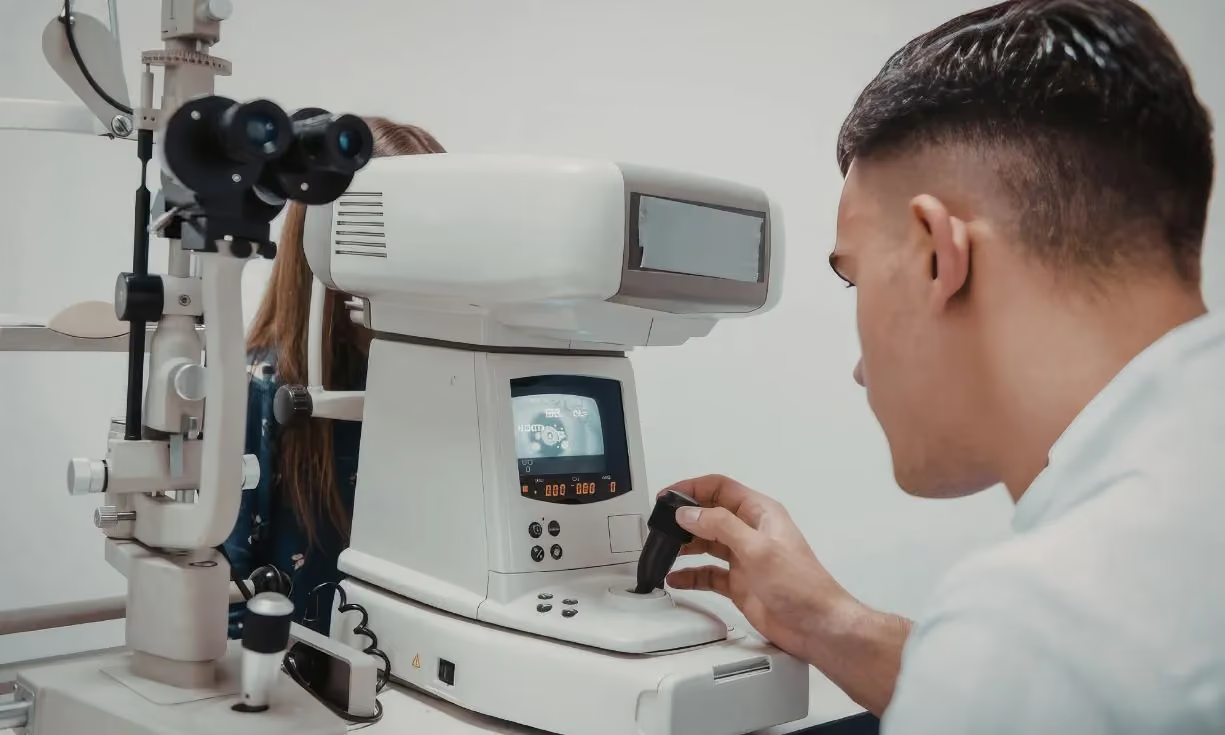
If you’ve ever visited an eye clinic in Canada, chances are the first person you interacted with was not the doctor - it was an ophthalmic medical technician.
They are the ones running diagnostic tests, preparing patients and making sure everything flows smoothly before the ophthalmologist steps in. In many ways, they are the backbone of modern eye care clinics.
This role is becoming increasingly important. Canada’s aging population, rising diabetes rates and growing demand for early vision screening are all contributing to a surge in eye care services. Clinics are expanding, wait times are under pressure and skilled support staff are in demand.
For internationally trained professionals, this creates a unique opportunity. Unlike many healthcare roles, becoming an ophthalmic medical technician does not require years of licensing. Instead, it offers a faster, practical entry into clinical healthcare, especially for those with medical or science backgrounds.
This is not a desk job - it’s a technical, patient-facing role that blends healthcare with hands-on diagnostics.
On a typical day, you might:
You become the person patients rely on to guide them through the process, often explaining tests and making them feel comfortable.
Unlike many entry-level healthcare roles, this position sits right in the diagnostic decision-making process.
That means:
For newcomers, this is especially valuable because it builds real Canadian healthcare experience quickly, which can open doors to more advanced roles later.
Most roles are clinic-based, which makes the work environment more structured compared to hospitals.
You’ll commonly find opportunities in:
Many positions offer regular daytime hours, which is a major advantage compared to shift-based healthcare roles.
Ophthalmic medical technicians are not regulated by a provincial licensing body.
This makes the pathway more flexible.
However, clinics still look for candidates who have:
Some professionals choose to pursue certifications through organizations like the Joint Commission on Allied Health Personnel in Ophthalmology (JCAHPO), but this is not always required in Canada. Other course offered by
If you want to move directly into ophthalmic roles, there are a few specialized programs in Canada that are highly respected and closely connected to real clinical environments.
This program is more competitive and suited for those with a strong science or healthcare background.
These programs are ideal if you want to enter the workforce quickly with real clinic experience.
If you are transitioning into the field, you can also start with broader healthcare programs such as:
Colleges like Centennial, Seneca and George Brown offer these programs, which can help you enter ophthalmic clinics and gain experience.
This organization supports ophthalmic professionals across Canada and helps maintain standards, provide continuing education and connect practitioners within the field.
While not mandatory, being connected to organizations like this can strengthen your professional profile.
If you already have experience in healthcare, this pathway can be much faster.
You may be able to leverage experience such as:
Instead of starting over, many newcomers:
In many cases, your previous experience is your biggest advantage.
Clinics often look beyond formal education.
Strong candidates typically have:
These are skills many internationally trained professionals already bring.
This is one of the faster healthcare pathways.
Many people start in entry-level roles and grow into technician positions quickly.
Demand for eye care services continues to rise, and clinics rely heavily on skilled technicians.
Typical salary ranges:
With experience, you may move into:
This role stands out because it offers:
For many newcomers, it provides a strong starting point with real upward mobility.
Even short programs can come with financial challenges.
Windmill Microlending offers low-interest loans of up to $15,000 to help cover:
This support helps newcomers move into healthcare roles faster. Check if you are eligible!
No. Most roles are not regulated, but training and experience are important.
Yes. Many clinics value international healthcare experience.
Yes. It offers hands-on clinical experience and fast entry.
Complete a short medical office or clinical support program and apply to clinics.

Fraud alert: Beware of individuals or accounts falsely claiming to represent Windmill Microlending. We never request personal information or payments through social media or messaging apps. Please verify all communication via our official channels ending with "@windmillmicrolending.org", "@lemoulinmicrocredits.org" or contact us via verified information available on our website if you are unsure.